JXH Journal / Shopping Bags
Paper Bag Size Chart and Measuring Guide
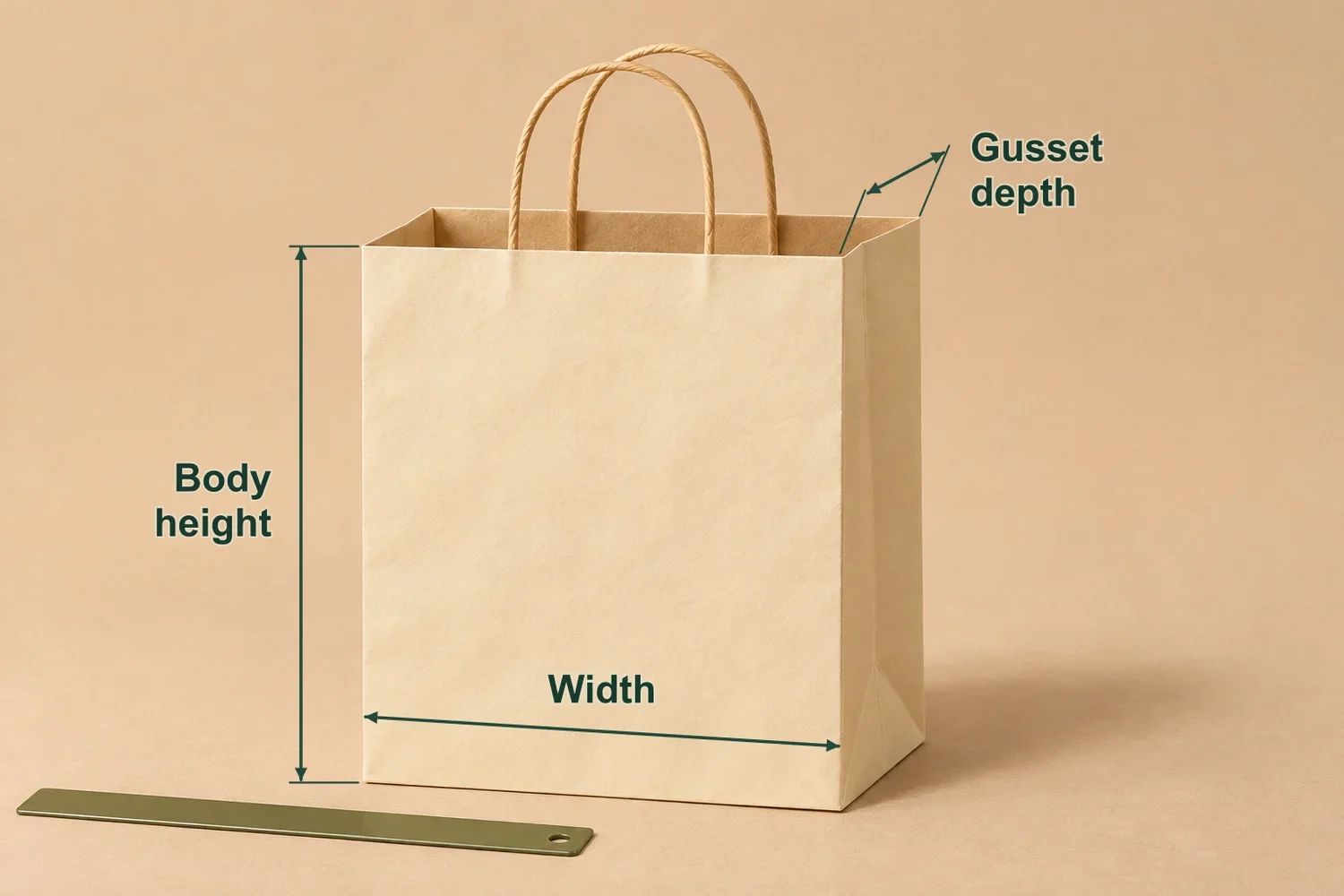
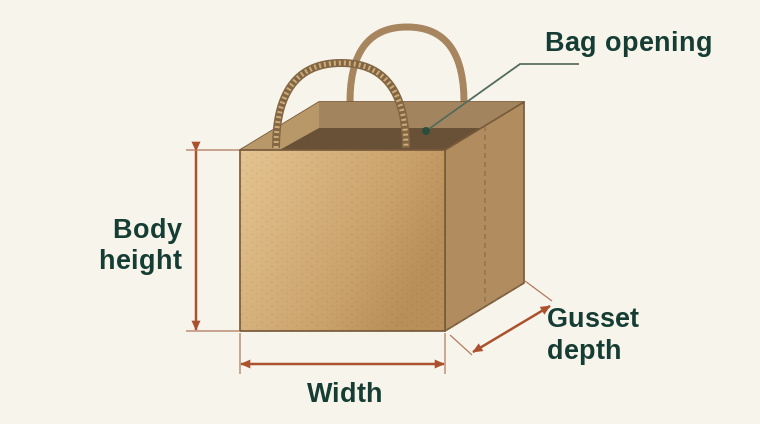
Measure a shopping bag with its base open. Record the width across the front, the depth from front to back, and the body height from base to rim. Leave the handles out of the height. A tall loop adds carrying room but gives the merchandise no extra space inside.
Updated
Four U.S. shopping bag sizes to try
These are examples from a U.S. supplier’s shopping bag chart. The first number is the front width. The second is the fully opened side depth, sometimes called the gusset. The third is the body height. They are reference sizes, not JXH stock specifications or guaranteed inside measurements. Metric values are rounded to the nearest millimeter using 25.4 mm per inch.
| Width × gusset × height (in.) | Approx. W × G × H (mm) | A useful first fit check |
|---|---|---|
| 5 × 3 × 8 | 127 × 76 × 203 | Can a small boxed item clear the narrow opening? |
| 8 × 5 × 10 | 203 × 127 × 254 | Does a rigid gift box sit flat after tissue is added? |
| 10 × 7 × 12 | 254 × 178 × 305 | Can a wide, lidded container go in level? |
| 16 × 6 × 12 | 406 × 152 × 305 | Does a folded garment fit across the wide face without bunching? |
Measure an existing bag at three points
- Width (W). Smooth the front panel and measure between its two side folds. If the bag is flattened on a table, measure only the face. Leave the folded side panels out of the width.
- Gusset (G). Open the side fold fully and measure from the front edge to the back edge. A single folded half of the side panel gives only part of this dimension.
- Body height (H). With the base flat, measure from its bottom edge to the finished top edge of the front panel. For a loop handle, record the distance from the rim to the inside top of the extended loop separately if hand clearance matters.
Section references 1
Check the opening and the usable floor
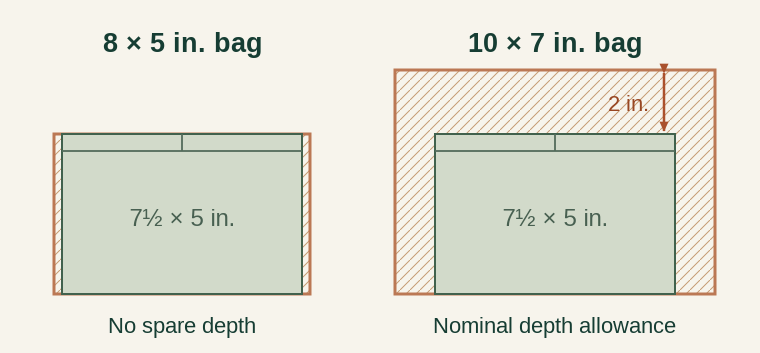
Take a carton measuring 7½ × 5 × 3 inches, with the 7½ × 5-inch face down. An 8 × 5 × 10-inch shopper looks tall enough. Yet its nominal gusset equals the full depth of the carton, leaving no allowance for tissue or a folded corner. Turning the carton a quarter turn would put 7½ inches against the same 5-inch gusset. Try the 10 × 7 × 12-inch example next. Its nominal floor leaves 2 inches beyond the carton’s depth; check the actual clearance on the sample.
To compare samples, keep the contents in their selling position. Try the opening first, then seat the package at the bottom and bring the handles together. A thick rim, a handle knot, or extra wrapping can interfere before the product reaches the base. If the sample is close, ask for the minimum usable inside dimensions and the supplier’s tolerances.
Section references 3
What to put on the size drawing
Mark the front panel, draw the three measurement arrows, and write the unit beside each number. Add the wrapped product’s maximum width, depth, and height in its packing position. If you show inches and millimeters, mark which set of dimensions governs production so rounding cannot change the intended size.
For a flat bag without a gusset, specify width and height. If a grocery supplier quotes a trade number such as #6, ask for the actual dimensions of that style. Confirm both the size and the packed fit when ordering across suppliers.
Section references 3
