JXH Journal / Shopping Bags
What Are Paper Bags Made Of, and What Makes Them Strong?
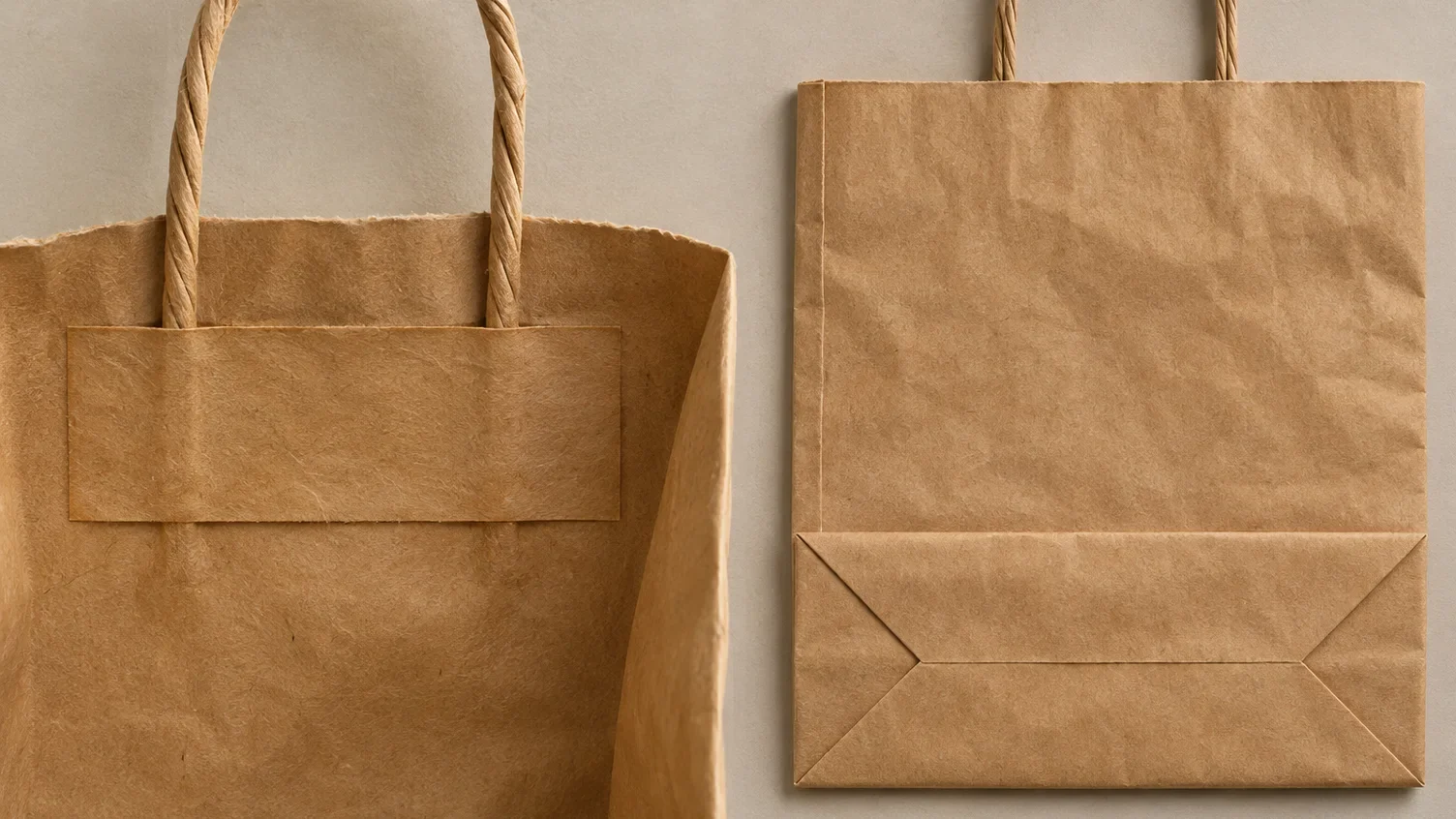
A typical paper shopping bag has a paper body folded and glued into shape. A handled version adds a separate grip and attachment, or a hand opening cut into the upper panels. To judge what it can carry, follow the weight of the purchase from the base all the way to your hand.
Updated
What to ask about the paper
Natural brown kraft and white kraft give designers different starting colors. A pale logo on brown stock and the same logo on white stock deserve separate print samples. Brown and white shopping-bag papers are available in a range of fiber compositions. If your brief specifies recycled content, get the grade and supporting documentation; color alone cannot establish the fiber source.
A supplier may also offer a sheet with a coated print surface or a laminated bag. Ask for the construction in writing. Identify the grade, coating or lamination, and any separate reinforcement in the quote. A glossy appearance alone will not tell you which construction you are buying. Ask to see a folded and printed swatch when the surface is important.
Read GSM, caliper, and load as separate measurements
| Specification | What it measures | Useful follow-up |
|---|---|---|
| Grammage (GSM or g/m²) | Mass per square meter of the sheet. | Ask for the grade name with the GSM. If a U.S. supplier quotes a basis weight in pounds, ask for the equivalent GSM or the sheet size and sheet count behind that weight. |
| Caliper | Thickness of the sheet under the stated measurement conditions. | Request the caliper if the brief specifies thickness. If it specifies stiffness or feel, fold and handle a sample of the grade. |
| Finished-bag carrying capacity | Performance of the assembled bag under a defined load and method. | Ask which bag size, body paper, handles, base, and test conditions the result covers. |
Trace a failure back to the construction
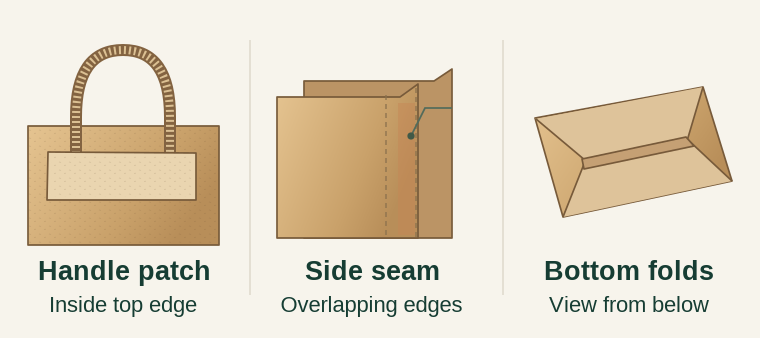
Consider a gift set with two narrow cartons. Set it down in the bag as a customer would. If one carton rests on the edge of the other, a small corner can take much of the load. If the floor opens at a glued overlap, inspect that joint before requesting a heavier sheet. A loose base insert, a poorly seated carton, and an opening seam call for different changes.
Now lift the bag by its handles. Look at the attachment on each side. Has the paper torn around a die-cut opening? Has a handle patch peeled away while the bag wall remains intact? Has the cord pulled free while the top panel stayed sound? Photograph the first change and identify the location. A supplier can investigate a specific joint more readily than a request for a “stronger bag.”
What makes a load claim comparable?
For a claimed carrying capacity, obtain the report or test description for the proposed construction. Record the sample revision, bag dimensions, paper grade, handle attachment, base construction, test load, conditioning, lift sequence, and acceptance criteria. Check whether a change to the paper, glue, or grip puts the new bag outside the tested configuration.
CEPI Eurokraft and EUROSAC describe EN 13590 as a European method for evaluating the volume and carrying capacity of retail carrier bags. A supplier can identify the method and edition behind its claim. A pack-and-carry trial with your merchandise answers a separate buying question: can staff pack the item and can a customer carry it as intended? Keep the trial notes with the approved sample.
Section references 4
Sources
- Mondi · Brown and white shopping bag papers and fiber options
- Broadway Industries · Paper Bag Guide, measurement and bag construction
- ISO 534 · Thickness measurement for paper and board, public abstract
- CEPI Eurokraft and EUROSAC · Industry guidelines for high-quality paper carrier bags, pp. 5–10
- Robins Packaging · Printed luxury paper bags, paper and lamination options
