Straight Tuck End Carton
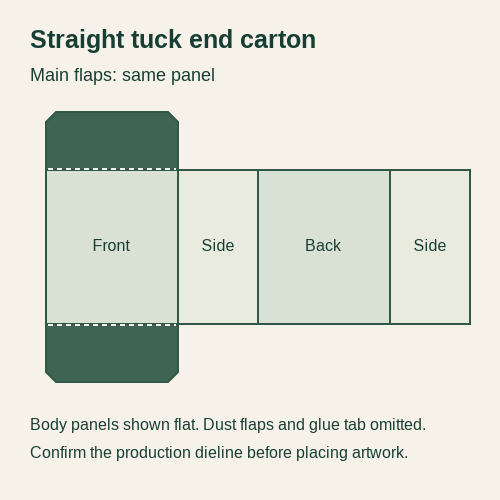
A straight tuck end carton has its two main tuck flaps hinged on the same body panel. Start with the face the buyer should see on the shelf and the end your packer will open to load the item.
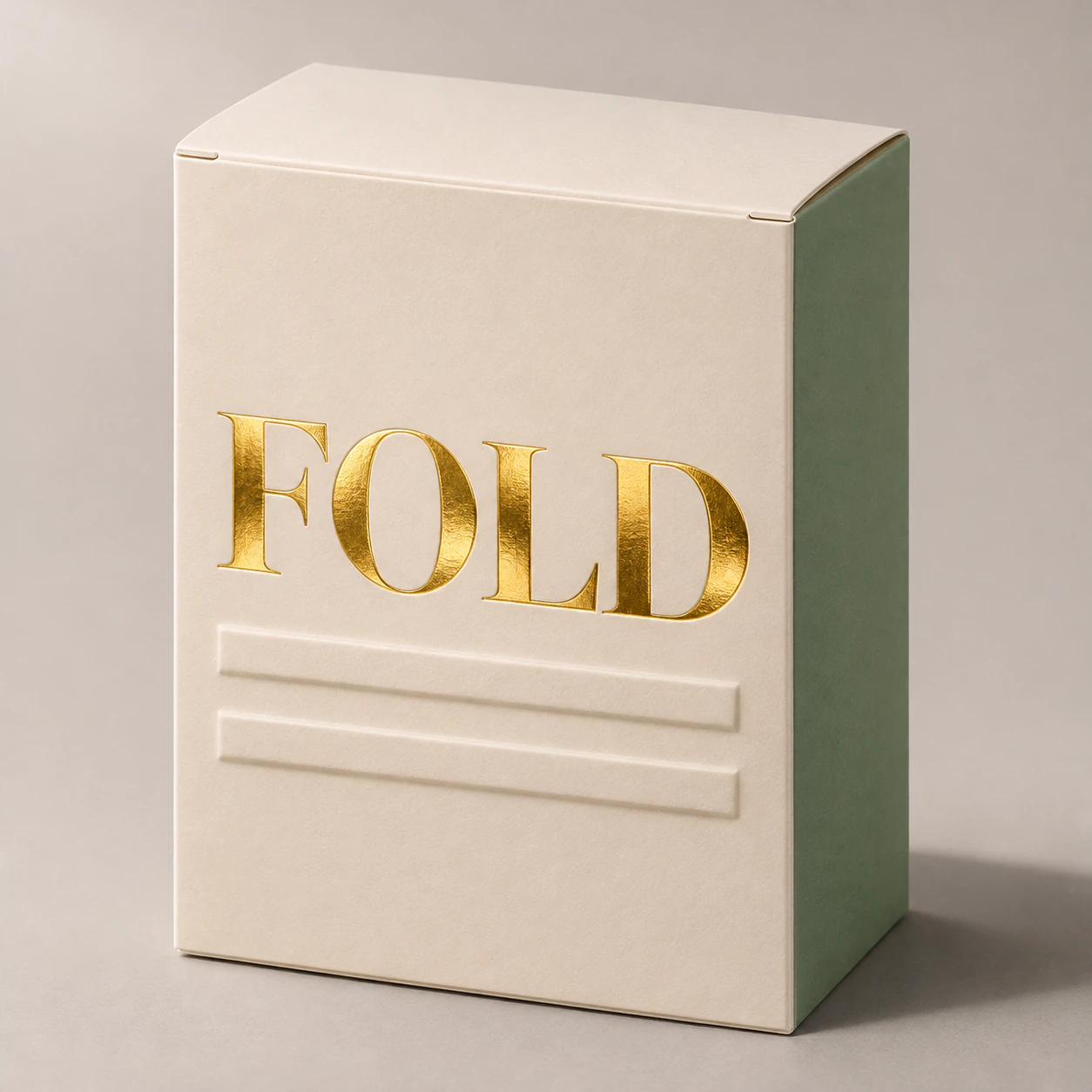
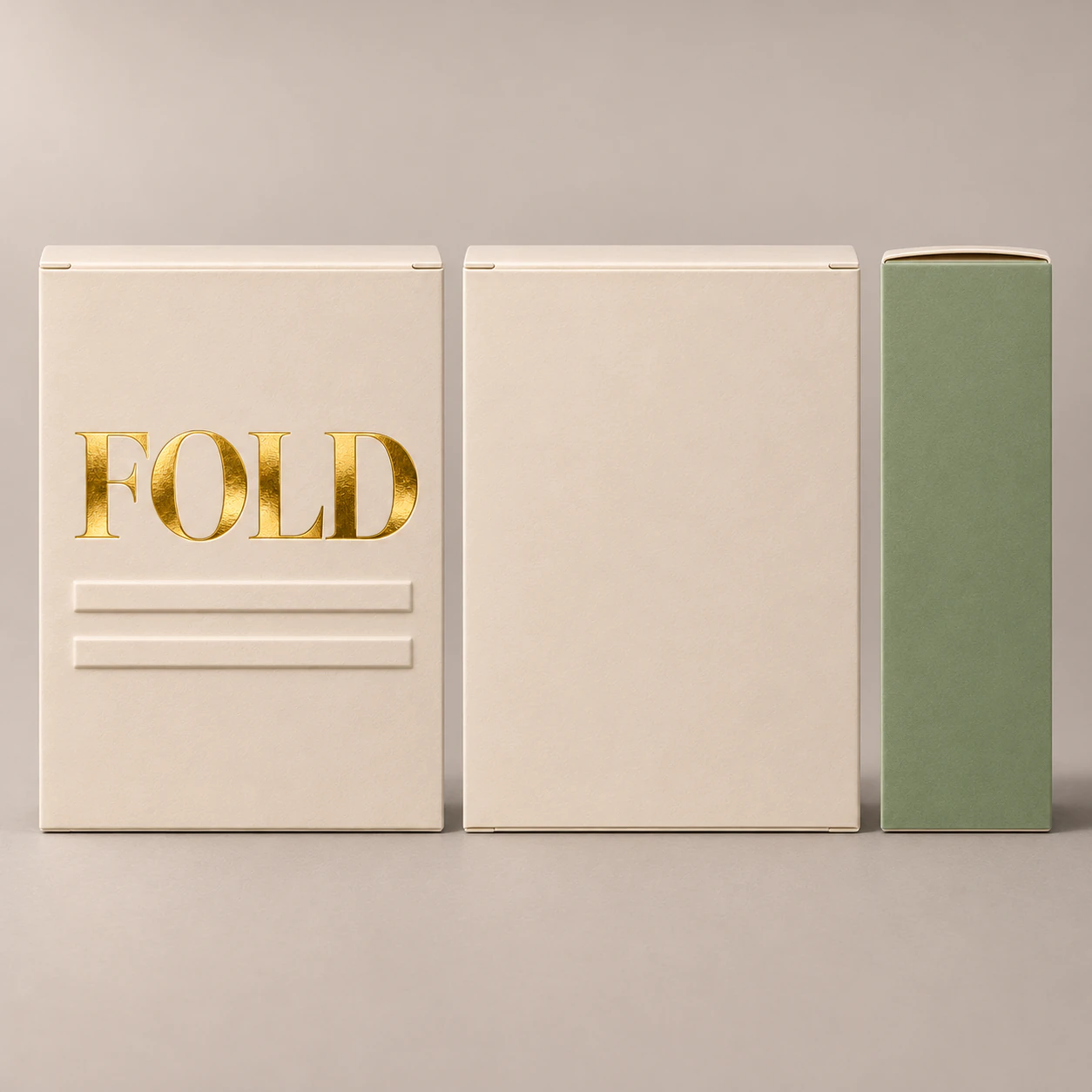
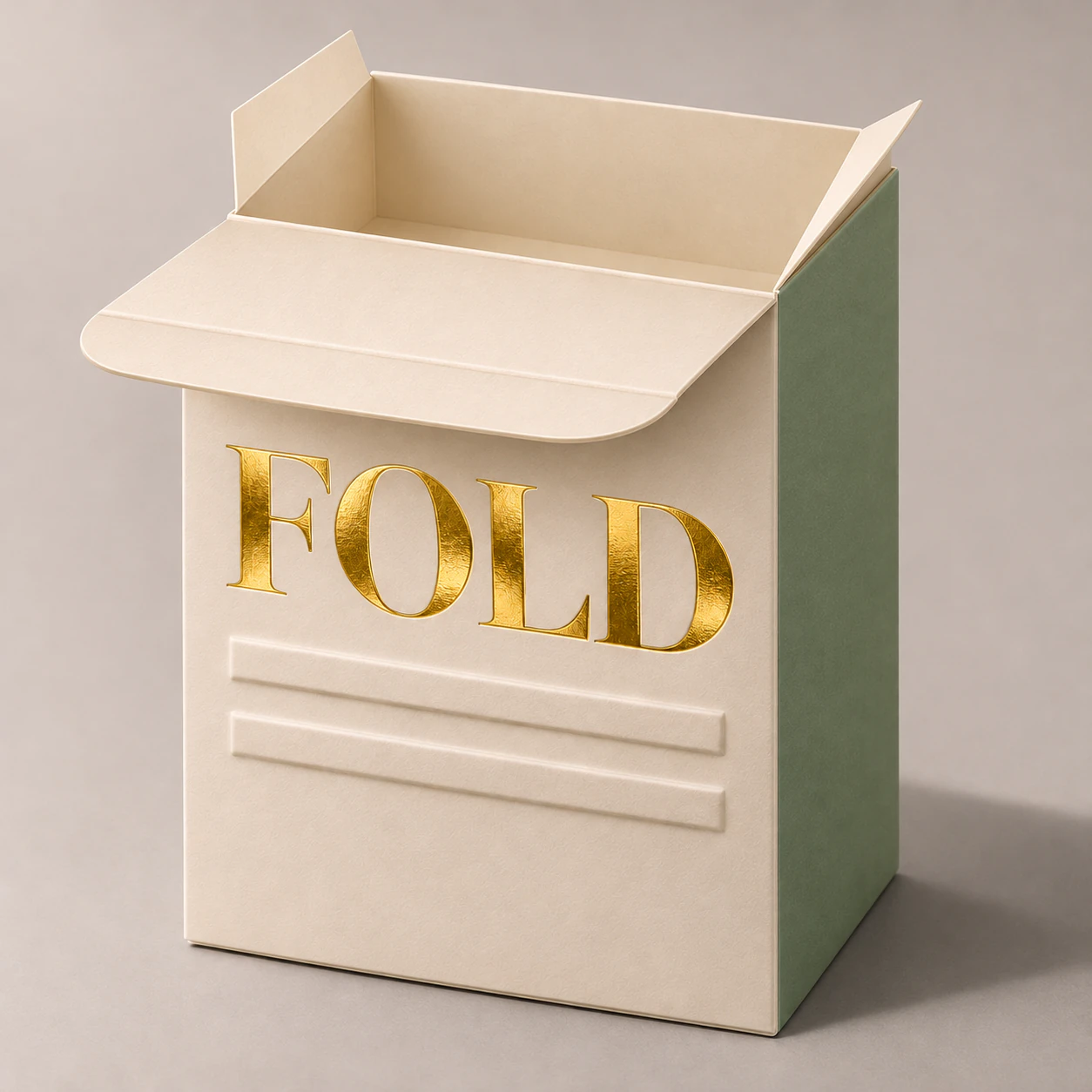

AI concept visuals. Final materials and finishes depend on project confirmation.
View the tuck flap diagramProduct specifications
- Flap direction
- Mark the top and bottom tuck edges on a single drawing, with front and back identified.
- Inside size
- Measure the product in packing orientation, including caps, protrusions and any insert.
Materials & customization
Materials & construction
- Material selection
- Select a folding board with the printed surface you need. Examine the creases on a scored and folded sample of the proposed stock.
Artwork & print
- Design review
- Place logos, ingredients and small type on the assembled panels. Check which flap edges interrupt the visible faces.
Selection notes for Straight Tuck End Carton
Use Closure Direction to Compare Formats
Straight tuck and reverse tuck differ in the direction of their main end flaps: same direction versus opposite directions. This affects how the ends relate to the carton panels. Neither name alone proves better protection or suitability. Compare the intended opening, artwork orientation, and assembly needs on the actual drawing or sample.
Internal Space Is Not the Same as Outside Size
Internal dimensions describe the space available for the packed item. Outside dimensions include the carton material and assembled construction. Copying outside measurements into an internal-size request can produce a different fit. Establish the item dimensions, any protrusions, and the necessary allowance before agreeing the carton dimensions; do not calculate a universal allowance from paperboard thickness alone.
Keep Small-Panel Information Readable
Compact faces can become crowded when a logo, instructions, and product identifiers compete for space. Prioritize the main display face, keep essential content clear of folds and closing areas, and check text at actual size. A larger design viewed on screen can hide readability problems that only become obvious on the assembled carton.
Applications
- Retail product cartons
- Use the folded sample to check how the item loads, which panel faces the aisle and where an opening instruction belongs.
Artwork & order preparation
- For your quote
- Give internal width, depth and height, quantity, product orientation and a drawing or photos of both ends.
FAQ
How can I tell a straight tuck from a reverse tuck in a photo?
A closed front view is rarely enough. Ask for pictures of both open ends on the same carton, or follow the main end panels back to their hinges on the dieline.
How should I state dimensions if my team uses different length and width conventions?
Label each measurement on a drawing and identify the opening face. A dimensional sketch is less ambiguous than an unlabeled three-number sequence.
What if the product needs to stay in one position inside the carton?
Describe its orientation and movement limits. Any insert or support is a separate design requirement; it is not automatically included with the tuck-end format.
Related products
White Card Folding Cartons collection →
Other formats in this collection
Related service · Packaging Printing
Request a quote
Add the preferences you know. You can discuss undecided specifications later.