JXH Journal / Rigid Gift Boxes
Folding Cartons vs. Rigid Boxes: What Changes at the Packing Bench?
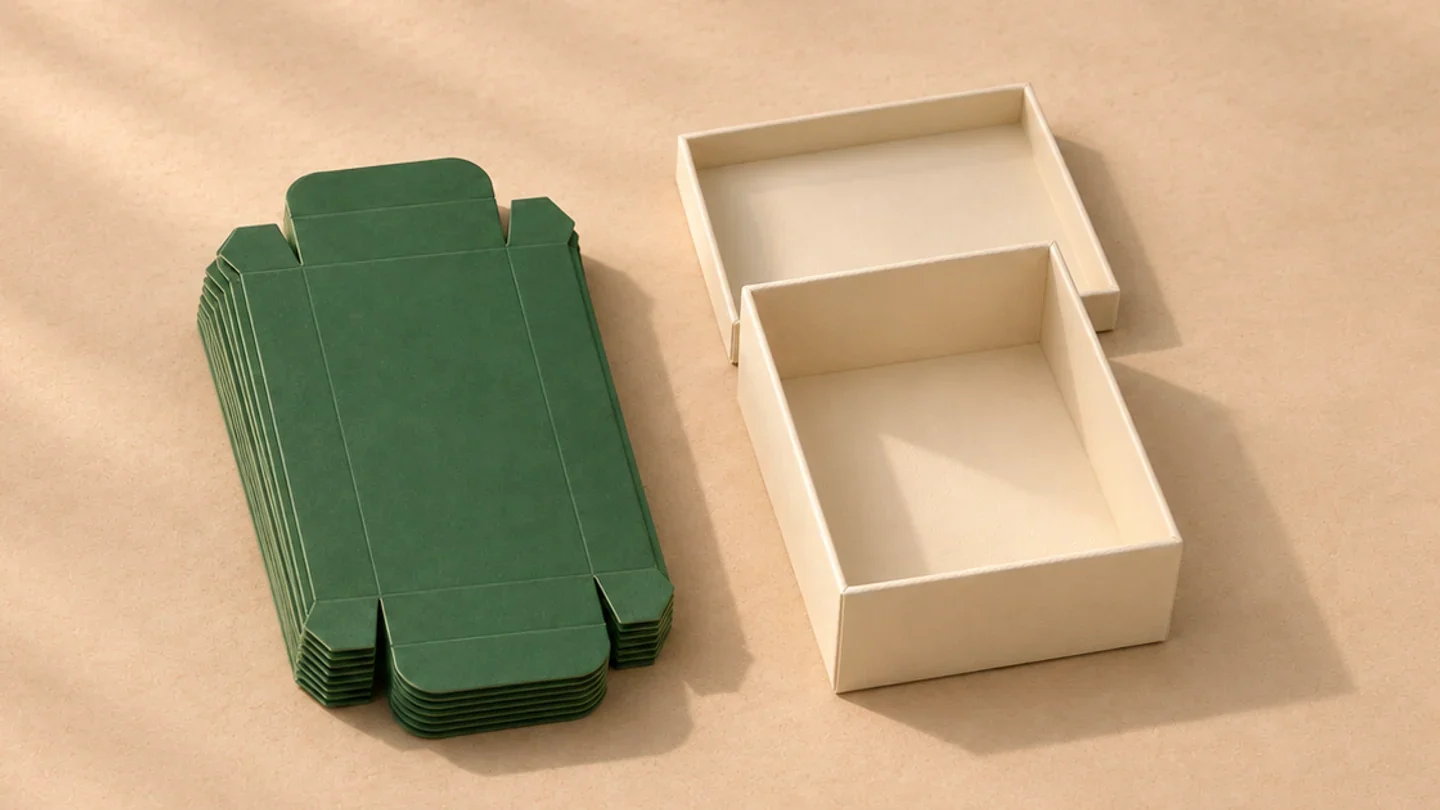
A folding carton usually arrives flat for your packing team to erect. A conventional rigid box arrives already formed and takes up space even when empty. For a purchasing team, the choice often turns on who assembles the package, where it sits before filling and what the customer should see when it opens.
Updated
A side-by-side comparison
| Decision | Folding carton | Conventional rigid set-up box |
|---|---|---|
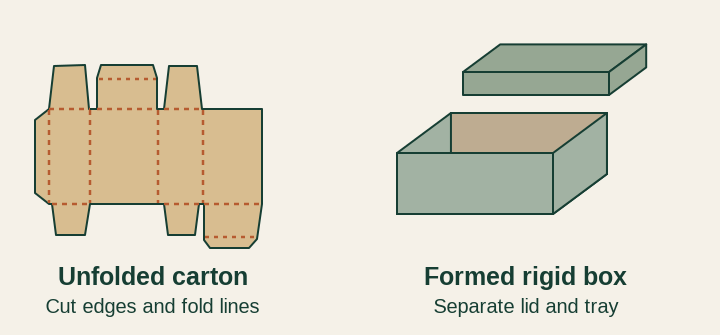
| Structure | A converter cuts and creases a paperboard blank. Depending on the style, seams may be glued before delivery. | Stiff board forms a shell with a separate wrap. Lids, trays or covers may be separate components. |
| Inbound handling | Bundles of flat cartons generally need less storage space before filling. Someone must open and close them around the product. | Formed boxes occupy three-dimensional space. Confirm whether separate lids or inserts still need assembly. |
| Print and finish | Artwork prints on the board or a prepared surface. Check how graphics cross scores and closures. | Graphics often print on the wrap. Check where they land after the wrap turns over a corner or edge. |
| Access to contents | A tuck flap can suit a single item pulled out from one end. An insert can hold several pieces. | A lid or hinged cover can expose a whole tray at once. The insert determines how easily each item comes out. |
| Protection | Specify the board, closure, insert and shipping outer for the item and route. | Specify the same elements. Stiff walls alone say little about how a fragile item will fare in parcel handling. |
Price the packed unit
Ask both suppliers to quote the same quantity, usable interior space, artwork version, finish coverage, insert and delivery destination. Separate one-time tooling from recurring charges. Identify who supplies the shipping case and who installs the insert. A lower box price can disappear if the quote leaves a packing operation to your fulfillment team.
For a first comparison, add the one-time tooling charge to the run totals for boxes, inserts, inbound freight, storage and packing labor. Include the run cost of any required outer shipping cases, then divide the full total by the number of saleable units you expect to pack. This is a planning estimate. Record the assumptions so a change in quantity or fulfillment location can be priced again.
Run one order through the packing bench
Take a single retail bottle sold in several printed versions. A folding carton lets the team store flats by version and erect each as needed. Have a packer identify the right version, load the bottle and close the flaps. Watch for a label that catches on a flap or ink that cracks along a fold in a dark printed panel.
For a gift set that must present three items together, try a formed box with a fitted tray. Time the steps from opening the inbound shipping case through placing the final insert card. Put the empty boxes and loose inserts in the actual staging area. If space is the constraint, ask whether a collapsible rigid construction would work and include its assembly steps in the trial.
Section references 3
Agree on the shipping trial
A shelf presentation test answers a different question from a parcel test. For an item sold online, evaluate the product, insert, retail box, cushioning and outer shipping case together. Tell the test provider how the order travels and agree beforehand what counts as damage. A broken product and a scuffed gift-box lid may both be failures for your brand.
Send the quote comparison and sample observations to the person who will pack the order. Their sign-off should identify the exact insert, closure and delivery format used in the trial so a later supplier substitution is easy to spot.
Section references 4
