JXH Journal / Rigid Gift Boxes
Types of Rigid Boxes and How They Open
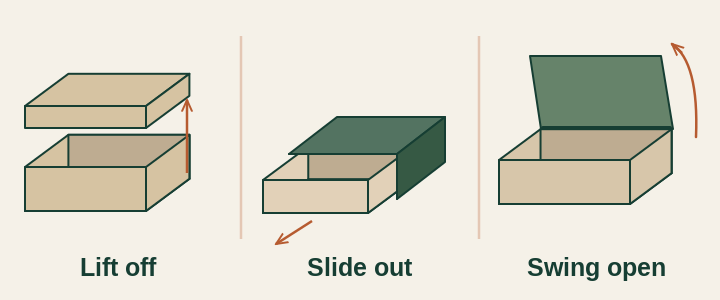
A rigid gift box can lift apart, slide open or hinge like a book. That motion matters when a customer tries to lift a bottle out of its insert or open a gift set on a narrow shelf. Choose the opening first, then specify the parts that hold the box closed and keep the product in place.
Updated
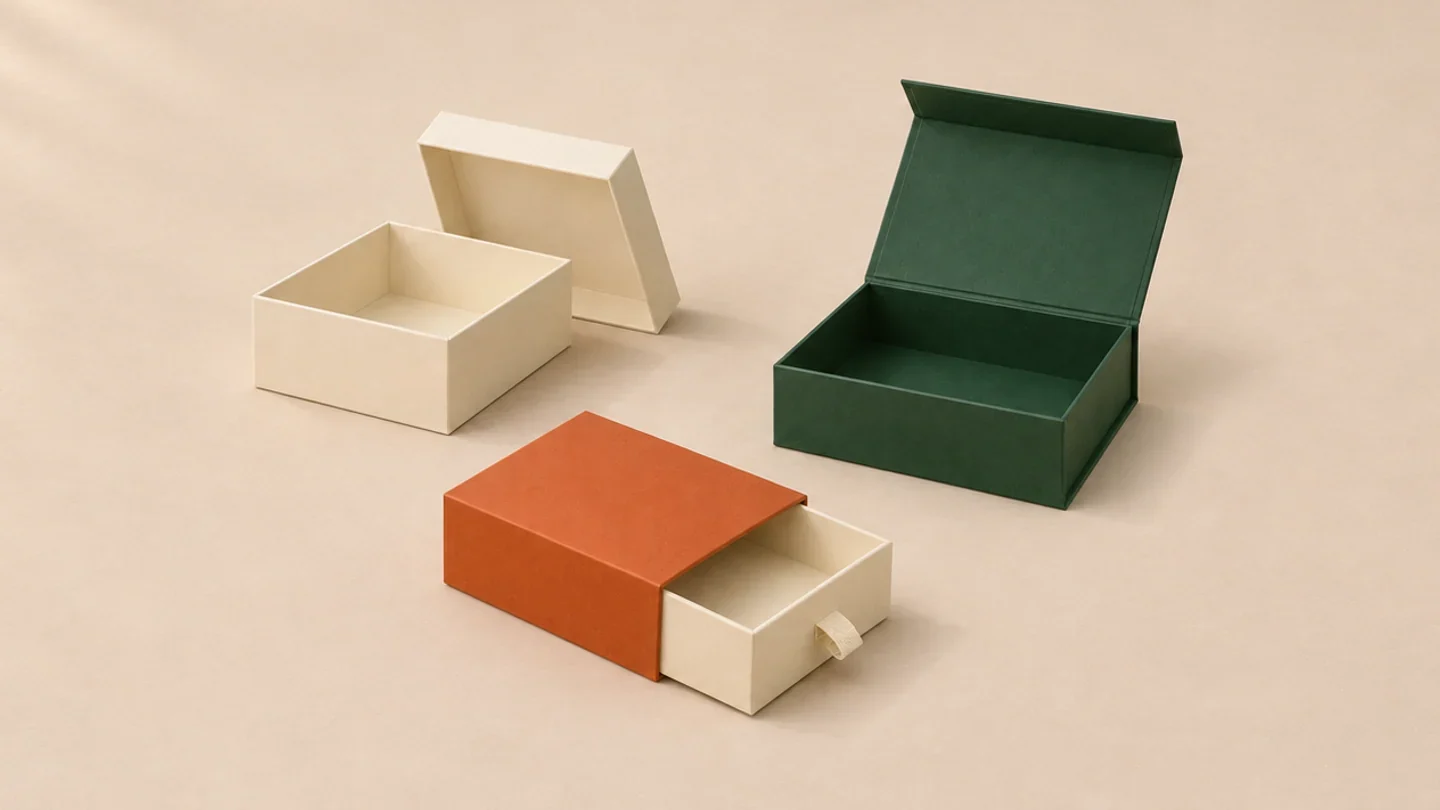
Four constructions to compare with the product in hand
| Construction | How it opens | What to try on the sample |
|---|---|---|
| Lift-off lid | A separate lid lifts off a base. The lid can cover part or most of the base wall. | Set it on a counter. Can you grip the base while lifting the lid, and is there somewhere to put the lid? |
| Shoulder and neck | This lift-off design adds an inner collar, called the neck, that projects above the base and guides the lid. Some designs leave a band of the neck visible when the lid is closed. | Check that the lid seats evenly. If the design calls for a visible band, inspect its width on all four sides. |
| Drawer and sleeve | A tray slides through an outer sleeve, often with a ribbon or notch to start the motion. | Load the tray and pull it horizontally. Check where the weight shifts and whether the buyer can lift out the first item. |
| Book-style box | A tray attaches to a cover with a spine. The lid stays with the box when it swings open. | Open the lid at the intended display angle. Check clearance behind the spine and make sure the lid stays out of the way. |
Specify the closure and the insert separately
“Magnetic” tells the supplier how the lid stays shut. The word alone leaves the tray depth and placement of the contents open. For example, a sketch of a hinged cover with a magnet in the front flap communicates more than a request for a magnetic gift box.
An insert supports or locates the merchandise inside the tray. For a two-piece skincare set, draw the bottles in the order a shopper should see them. Indicate where fingers can reach each one. If the first bottle must come out before the second is accessible, decide whether that sequence makes sense for the set.
Section references 3
What sits beneath the printed wrap?
In a conventional set-up box, stiff paperboard gives the box its shape. Chipboard, sometimes called grayboard, is one board choice. A separate sheet of printed or decorative paper gives the exterior its color and texture. Specify the visible wrap and the structural board separately so that a change in graphics does not silently change the box construction.
For a typical two-piece box, the converter cuts board for the lid and base, forms each tray and secures its corners. The wrap adheres to the outside and turns over the rim. For a book-style design, a separate tray joins the hinged case. Inspect a finished sample at the corners and at the edge where the wrap turns inward, especially if a printed border needs to line up with the lid.
Section references 1
Choose the motion before approving the artwork
Picture a counter display with the box facing the shopper. A drawer needs room in front to travel. A hinged lid needs space behind or above the box. A lift-off lid lets a shopper view the entire set from above, but it introduces a loose piece for the sales associate to manage. Mark the available space on your sketch and try each shortlisted design in that space.
Give the converter the product orientation, packed dimensions and weight, a sketch of the opening, and any requirement for the box to stay open on display. Ask for a plain structural sample first. A physical trial with the real contents can settle questions about grip and access before anyone commits to foil tooling or a printed wrap.
